Why Regular Maintenance is Essential
An electric scooter is not just a "toy" you buy and forget — it's a machine containing an electric motor, lithium battery, electronic control board, and braking system. Regular maintenance extends the scooter's life from 2 years (without maintenance) to 5-7 years (with regular maintenance).
The Difference in Numbers:
| Item | Without Maintenance | With Regular Maintenance |
|---|
|---|---|---|
| Battery lifespan | 1-2 years | 3-5 years |
| Tire lifespan | 3-6 months | 12-18 months |
| Brake pad lifespan | 6 months | 12-15 months |
| Unexpected breakdowns | 3-5 times/year | 0-1 time/year |
| Resale value | 20-30% | 50-60% |
Professional Maintenance Schedule
Daily Maintenance (2 minutes only) 🕐
Quick visual inspection: Check for visible damage or loose screws.Check charge level: Never leave with less than 30% battery — you might get stranded.Test brakes: Squeeze the brake lever before starting to confirm response.Weekly Maintenance (10 minutes) 📅
Clean the exterior: Wipe with a damp (not soaked) cloth. Focus on ventilation openings and joints.Check pneumatic tire pressure: Use a pump with a pressure gauge. Ideal pressure is usually 40-50 PSI (check your user manual).Inspect the power chain: Make sure the charging cable and port are clean and free of dirt or oxidation.Monthly Maintenance (30 minutes) 🔧
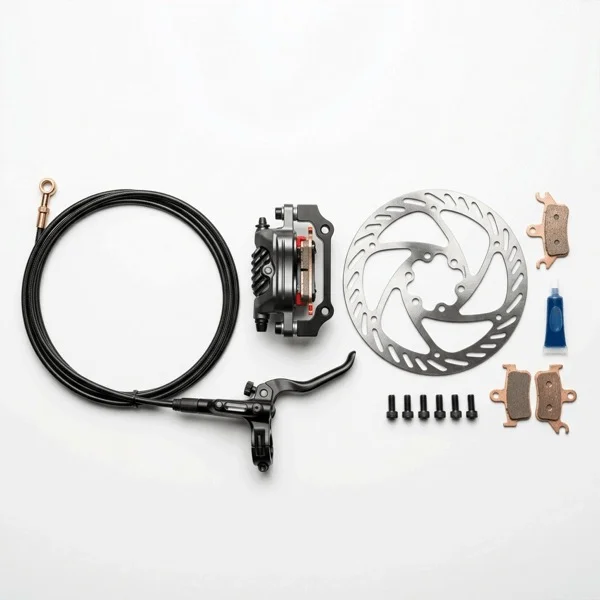
Tighten all screws and bolts: Use the correct size Allen key. Riding vibration gradually loosens bolts — especially handlebar and folding joint screws.Inspect disc brake pads: If thickness is below 1.5 mm, replace immediately. Thin pads mean longer braking distance and greater danger.Lubricate moving joints: Apply a drop of silicone oil on the folding joint, wheel axles, and throttle handle. Never use WD-40 — it dries joints over time.Update firmware: Some scooters support updates via their app. Updates improve performance and fix known issues.Seasonal Maintenance (Before summer and winter) 🌡️
Full battery inspection: If you notice range dropped more than 20% from new, the battery may need replacement or recalibration.Deep clean: Remove wheels and clear accumulated dirt around the hubs. Clean the motor from dust with compressed air (never use water on the motor).Battery Care — The Most Important Section
The battery is the most expensive component (30-40% of the scooter's price). Proper care protects your investment.
Golden Rules for Battery Care:
The 20-80 Rule: Keep the charge between 20% and 80% as much as possible. Charging to 100% or depleting to 0% reduces available charge cycles.Ideal charging temperature: 15-25°C. Never charge immediately after use (battery is hot). Wait at least 30 minutes.Don't leave the battery empty: If you won't use the scooter for more than 2 weeks, charge it to 50-60% and store it. Empty battery stored = dead battery.Original charger only: Cheap chargers deliver irregular voltage that damages battery cells. Use only the original charger or one certified by Nshtare.Summer storage: Don't leave the scooter in a closed car under the sun (interior temperatures can reach 70°C). This permanently damages the battery.When to Replace the Battery?
| Indicator | Action |
|---|
|---|---|
| Range dropped 30%+ from new | Time to replace |
| Battery dies suddenly (from 40% to 0%) | Cell damage — replace immediately |
| Swelling in battery body | Danger! Stop using immediately |
| Battery exceeded 800 charge cycles | Capacity loss beginning — plan replacement |
| Burning smell during charging | Stop immediately and contact support |
Tire Care by Type
Pneumatic Tires
Check pressure weekly (40-50 PSI).Look for punctures or sidewall cracks.Replace if bumps or uneven wear appear.Tip: Add puncture-preventive sealant (Slime) — automatically seals small holes.Solid Tires (Honeycomb)
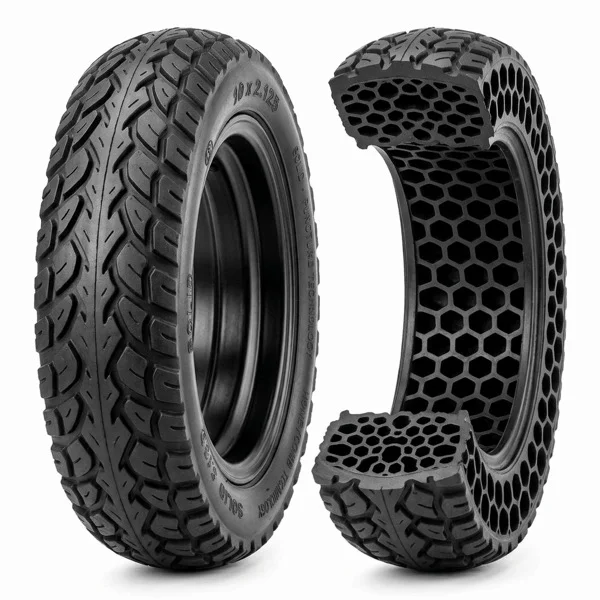
No pressure maintenance needed — but check for wear.Replace if the surface becomes smooth (lost tread).Uneven wear may indicate an alignment issue.Gel-filled Tires
Treat like solid tires — no air pressure needed.Watch for gel leaking from cracks — replace immediately.Common Issues and Solutions
Issue 1: Scooter Won't Turn On
Check: Battery charged? Charger properly connected?Try: Hold the power button for 5 continuous seconds.If it persists: The controller board may be damaged — contact support.Issue 2: Clicking or Grinding Noise
Common cause: Loose screws or brake pads touching the disc.Solution: Tighten screws + adjust brake pad clearance.Issue 3: Abnormal Vibration at High Speeds
Common cause: Partially punctured tire or unbalanced wheel.Solution: Inspect tires + ensure wheel is securely attached.Issue 4: Brakes Not Responding Fast Enough
Common cause: Worn brake pads or loose brake cable.Solution: Replace pads + adjust brake cable tension.Warning: Never ride with weak brakes — it's a safety hazard.Essential Maintenance Tools You Need
| Tool | Use | Approximate Price |
|---|
|---|---|---|
| Allen key set (3-6 mm) | Tighten bolts | 25-40 SAR |
| Air pump with pressure gauge | Pneumatic tires | 30-60 SAR |
| Silicone oil spray | Lubricate joints | 15-25 SAR |
| Electronics cleaner | Clean control board | 20-35 SAR |
| Microfiber cloth | Clean body | 10-15 SAR |
Total cost: Only 100-175 SAR — a small investment that saves you thousands.
Nshtare's Final Advice
Regular maintenance is not a luxury — it's a guarantee for your safety and protection for your investment. At Nshtare, we provide all genuine spare parts (brake pads, tires, chargers) at competitive prices, with free shipping and detailed installation guides.
Remember: 10 minutes of weekly maintenance = 3 extra years of scooter life + a safe and enjoyable riding experience.
Ready to Buy?
Browse our collection with the best prices, a 1-year warranty, and Cash on Delivery.
Browse Spare Parts